Interview with service engineers from RENOME SMART

Interview with service engineers from RENOME SMART

Interview with service engineers from RENOME SMART 1480 1055 RENOME SMART

It’s not news that many women work in the IT sector, successfully holding various positions from HR to team leads and CEOs. RENOME SMART operates in a unique niche of fintech, so in our arsenal of positions, there are quite atypical specialists for traditional IT companies, such as service engineers. The main task of these specialists is to provide service (restore functionality or availability) of banking devices: ATMs, terminals, POS systems, and so on. At first glance, a service engineer may seem like a male-dominated position, but as with other vacancies, the company has no gender biases.

Anna Miroshnykova and Christina Ikonnіkova are service engineers at RENOME SMART. They work in the POS terminal service and perform their work with high qualifications and quality. We asked the girls to tell us about their working weekdays and their own successes in a position that is often labeled as a “male” job.

Anna Miroshnykova
service engineer, Odesa

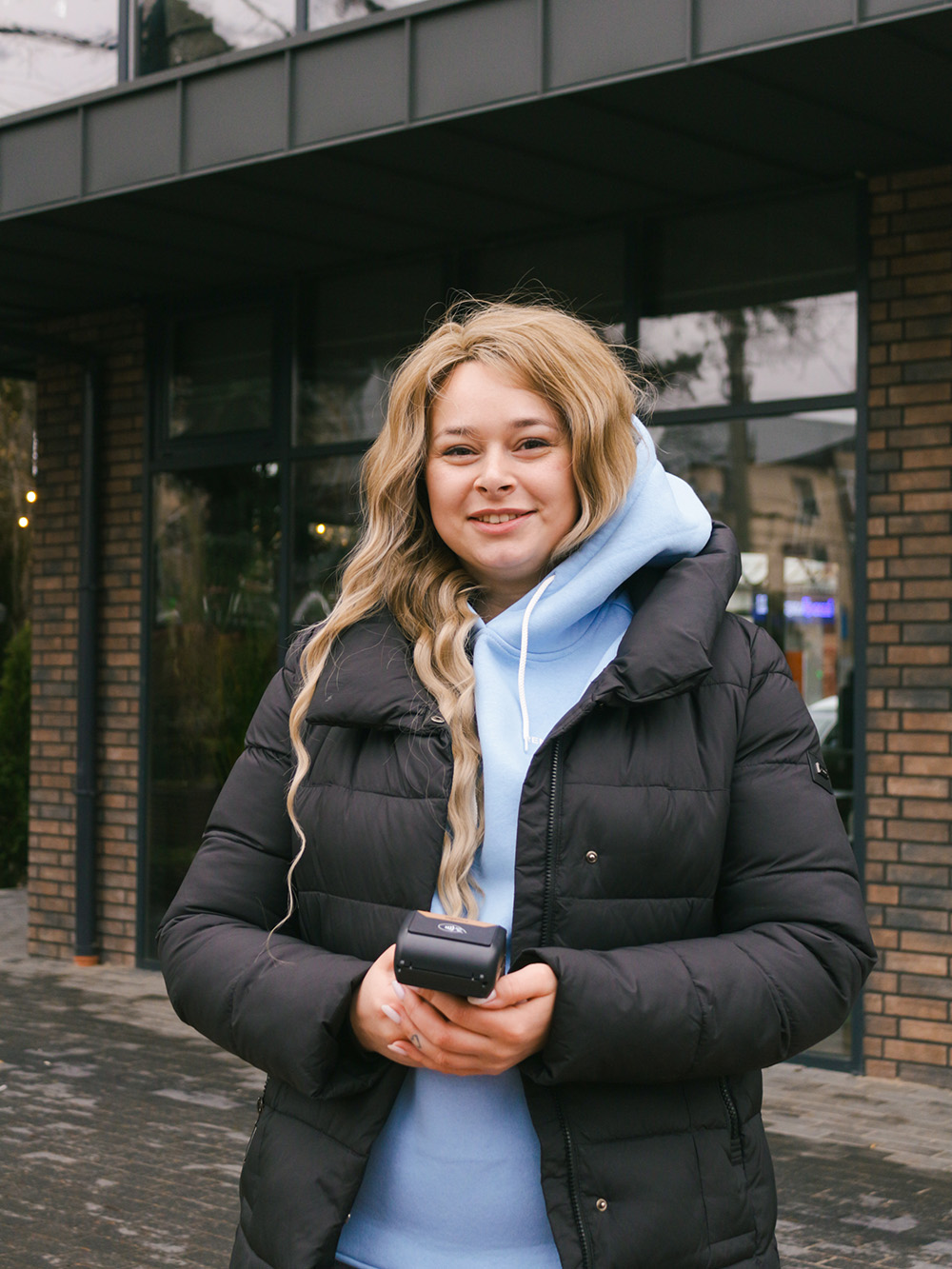
Christina Ikonnіkova
service engineer, Khmelnytskyi

Share the story of how you became a service engineer?

Anna:
By education, I’m a web security developer, but I’ve never actually worked in the field. Previously, I was a ticket sales manager at a travel agency, then I served as an acting director. Then the pandemic hit, business declined, and I resigned. I tried my hand at logistics — it was a very brief experience, not even worth mentioning on a resume. It wasn’t for me: I came, I saw, I left.

Job offers in Odessa were dismal: it’s hard to survive on a salary of 8-10 thousand hryvnias per month. So I started looking on more “narrow-profile” websites and paying attention to jobs related to my degree. Honestly, I also felt tired of constant interaction with people. That’s when I came across the vacancy at RENOME SMART, which matched my education, required having a car, and allowed me to devote enough time to it. Plus, I don’t get stopped at checkpoints (laughs). I went through the interview, went for training in Rivne, and everything has been going great for six months.

Christina:
I have an economics degree, but I had the opportunity to familiarize myself with the work of a service engineer earlier because my husband works in this field. Now, POS terminals are very widespread — they’re practically everywhere, and if they’re not, they soon will be. When a vacant position opened up at RENOME SMART, I decided to apply. My husband helped me prepare, I went through the interview, and I got the offer.

Anna Miroshnykova
photo by Kateryna Yemelyanova

What’s it like working in a predominantly male team?

Christina:
In Khmelnytskyi, there are two other engineers besides me, Oleg and Ivan, who always provide support and assistance if I don’t know something.

Anna:
In the office, my colleagues have been very supportive from the very beginning. There’s no judgment, no one acts superior. I have a great team!

As for clients, sometimes they might find it hard to conceal their surprise and may ask if I’m really there to install the terminal and if I know how to do it. Then I pull out a set of screwdrivers from my pink purse, and their eyes widen (laughs). But such situations are rare.

And what else does a service engineer who maintains POS terminals usually carry with her?

Anna:
A folding knife, plastic ties, and that’s about it for now, because my purse is small. But seriously, we carry the rest of the necessary equipment in the car. It includes a bunch of various cables, internet connection cables, power adapters for replacement in case of burnout. At first, I used to leave them in the office, thinking I would only take them when needed. Then experience taught me it’s better to keep everything with me to avoid going back and wasting extra time. And I also carry a lot of cardboard boxes from the POS that need to be returned to the bank later on.

Tell me about your duties and the devices you deal with.

Anna:
I install, uninstall, and sometimes troubleshoot POS terminals. But it’s more like clicking on a phone. My responsibility area covers the city of Odessa, aiming to relieve engineers who deal with ATMs. I collaborate with Raiffeisenbank, Oschadbank, and Sense Bank and have probably dealt with all POS terminals except for Ingeniko DX8000 and EZPOS.

Christina:
In addition to preparing and installing POS terminals in Khmelnytskyi, I also prepare them for the districts because we have one set of keys. I also handle logistic processes for consumables for colleagues working outside the city. In Khmelnytskyi, POS terminals are usually Ingenico brand, and the most common models are Move and Desk. However, due to recent changes in legislation, many want to have terminals with integrated cash registers, which I’ve already had the chance to work with.

Christina Ikonnіkova
photo by Mykyta Babich

How long does it take to install one terminal, and how many requests can you process per day?

Anna:
If the client’s network is working well, the installation process takes about five minutes: plug it into the socket, and it “boots up.” Then another couple of minutes to explain to the client how to use it.

However, once I spent almost two days installing a POS terminal for a pharmacy. Despite excellent connectivity, we couldn’t install it, mostly due to a glitch in the banking software, so we had to re-flash it.

I can process no more than 10-12 requests per day, as I need to travel to different parts of the city. If there are a few more, then several requests are typically at the same address. Overall, you start work in the morning and can finish all tasks by 6:00 PM.

Christina:
I’ll add that, like other service engineers, we receive requests through the Smart Service app. They can “fly in” at any time, so we can’t accurately predict our workday. If I receive a request to send POS terminals to the districts, I try to do it within a day. If I’ve planned my tasks but receive a more urgent service request, I make changes to my previous route and prioritize it first.

What kinds of issues do you usually deal with?
How do you resolve them?

Christina:
The most common issue is usually a lack of connection. So when we’re called out, we check the type of connection, determine if a cable or SIM card replacement is needed, and if necessary, make changes in the settings. If the terminal itself is malfunctioning and we can’t fix it on-site, we proceed with device replacement.

Anna:
I once encountered a situation where a loss of connection was reported, but it turned out the terminal was simply unplugged from the power source. It was a self-service kiosk where someone probably had been working and accidentally unplugged the cable. You wouldn’t notice this in a closed kiosk, so the manager thought something was broken. We submitted a request, I arrived, plugged it back in, and went on my way.

Anna Miroshnykova
photo by Kateryna Yemelyanova

How often do you have to communicate with clients?

Christina:
Most of the contact with clients occurs in location: explaining how it works and setting it up. But some clients call themselves to ask what to do if a coin gets stuck, for example. Of course, it’s not our job, but we help and advise where to turn, and if something breaks, we direct them to file a request.

Anna:
Also, communication with clients is necessary to avoid arriving at closed doors. Once, a client rescheduled the installation for three weeks because they were going to a hookah lounge or had other matters…

We also have to communicate with partners. Once I went to install terminals at one of the “Tavria” supermarkets: I installed them, checked them with the manager—they all worked, we did a transaction—everything was fine. I thought of leaving, but he asked me to wait for the logo to change on the screen. In a minute, it changes, and there’s the logo of another store. The administrator was shocked—money went to the wrong place… I reassured them that everything was okay, and we would solve it now. It was some glitch on the bank’s side, and it’s good that we have a special chat for quick communication. I quickly wrote, the guys sent the correct file, and in about 15 minutes, everything was back to normal.

Anna Miroshnykova
photo by Kateryna Yemelyanova

How often do you have to deal with something new for yourself? And where do you turn for “first aid”?

Christina:
Recently, a “Roshen” store opened in Khmelnytskyi, and I needed to work with POS terminals that include a cash register program. It was a new device for me, the Lane500, and it was a new experience. There were a lot of concerns from the bank’s side (they even prepared the software incorrectly the first time, so I had to go back), but thankfully, I managed to handle everything successfully.

Anna:
In the first few months, there was a bit of panic. During training, although it was very interesting, it was hard to remember everything, so guidebooks came in handy. And if I couldn’t find the answer I needed in them, I would call my colleague Denis Silyaev. Maybe he wasn’t always thrilled about it, but I’m grateful that he never left me in a bind.

Now, I’ve accumulated some experience of my own, as we deal with issues that occasionally repeat themselves. Of course, there are new projects and POS terminals to work with, which are interesting to delve into. The opportunity to constantly be on the move, to learn something new, I suppose, is what I like the most.

Christina Ikonnіkova
photo by Mykyta Babich

Christina:
I know that RENOME SMART also deals with servicing validators. We don’t have them in Khmelnytskyi yet, but it’s just a matter of time. I think it would be interesting for me to work with them as well. Fear of change or something new is not my style. It’s exciting, but at the same time, it’s cool!

Interview prepared by Yulia Omelianets