
Our colleagues, Mykhailo Ushomirskyi and Oleksandr Gogsadze, discuss the technology that enables people with visual impairments to manage their finances independently while explaining why the solution created in 2013 is receiving special attention today.

Mykhailo Ushomirskyi
Project Manager
RENOME SMART
Oleksandr Gogsadze
Banking Relationship Manager
RENOME SMART
What is a Voice Assistant?
Mykhailo:
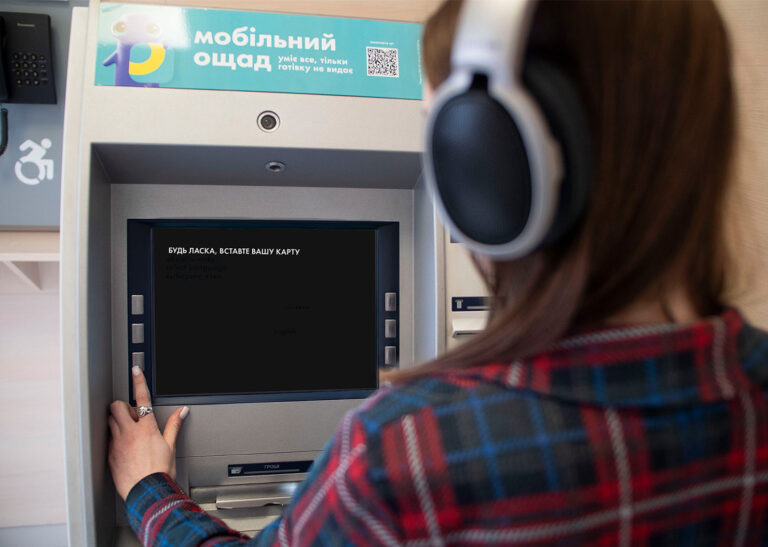
The main idea behind Voice Assistant is to enable low vision and blind individuals to operate ATMs. Typically, such devices follow a script with a large amount of visual information. However, it’s difficult for the visually impaired to process so much information. It’s more convenient when the screen displays a few key words written in large font, and the background is contrasting.
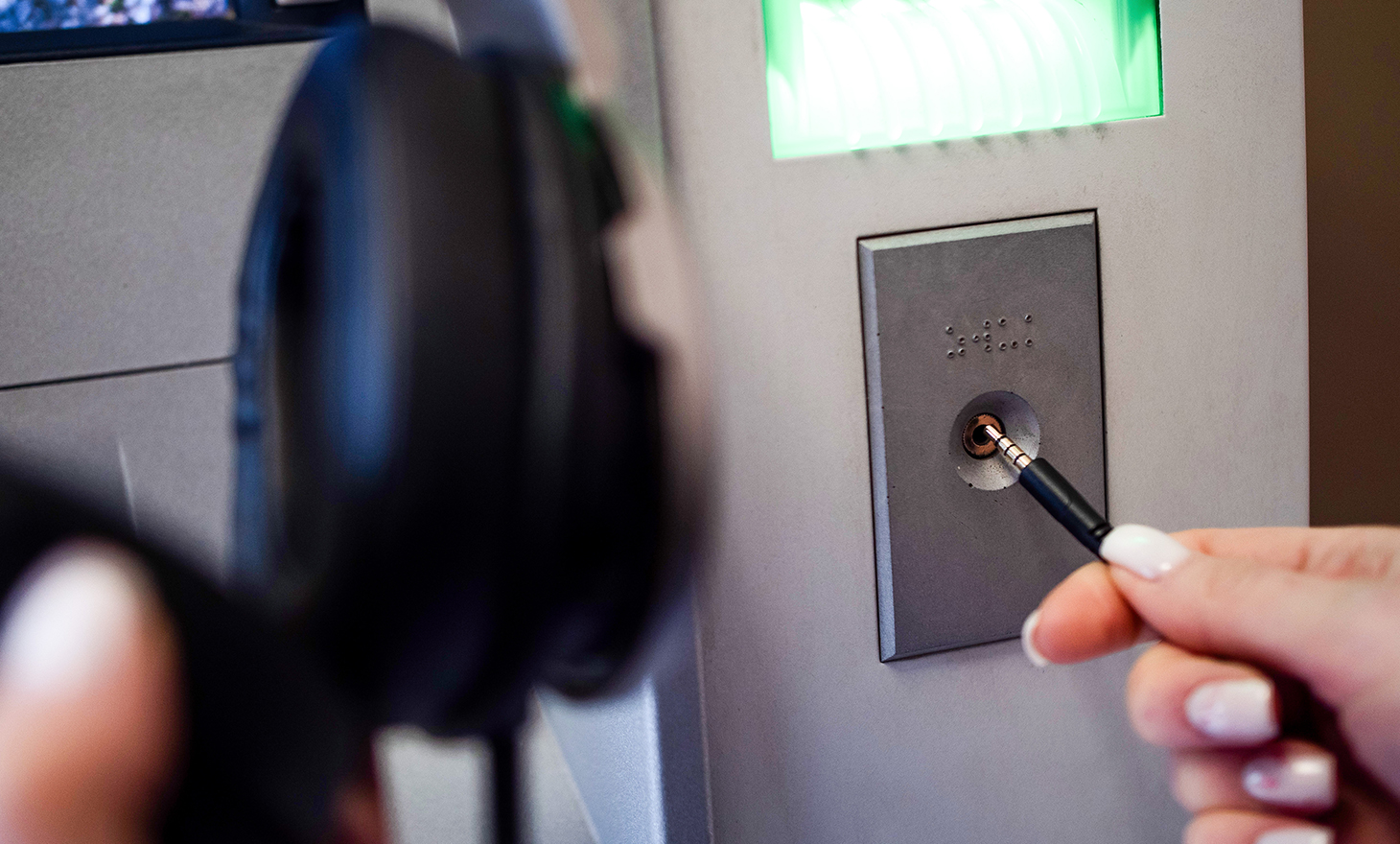
For such users, we have created additional functionality that offers a simpler scenario with a minimalist interface. Moreover, the solution allows the device to “speak” with the bank’s client. To do this, any wired headphones need to be connected to the ATM, and the voice module will audibly reproduce the messages displayed on the screen. This option will be useful for people who have completely lost their sight or cannot read textual content.
How can a person with visual impairments use this feature?
Oleksandr:
Voice Assistant is activated immediately after pressing a specific key on the keyboard. If the user cannot read the prompts on the screen, then, as Mykhailo mentioned earlier, they need to insert headphones into the socket to listen. The system will then guide them step by step to their destination. Moreover, the scenario is so simple and understandable that external assistance is not required.
Mykhailo:
It’s worth noting that the text version is displayed on the monitor in any case, while audio is optional.
What exactly will the voice assistant guide users through?
Oleksandr:
It assists with cash withdrawals, announces the account balance, helps choose the type of transaction or the placement of devices on the ATM (card reader, receipt printer, cash dispenser), and so on.
Is the audio guidance recorded or automatically synthesized?
Mykhailo:
This solution utilizes machine speech that vocalizes the prompts displayed on the screen.
Who was the first client to order this technology?
Mykhailo:
In 2013, we developed Voice Assistant for our partner in India. Soon after, we realized that the Ukrainian market also needed this product.
Oleksandr:
In 2017, we implemented Voice Assistant for Oschadbank. At that time, the bank was establishing inclusive branches throughout Ukraine, and our module played an important role in them. Since then, we’ve received inquiries from several banks, but real interest has only emerged now, with the beginning of a full-scale military invasion of Ukraine.
Why?
Firstly, unfortunately, the number of Ukrainians experiencing vision problems is increasing, so they require special attention and equal access to banking services. Secondly, banks strive to be socially responsible and accessible to various people, regardless of their individual characteristics.
How long does it take to implement the solution?
Mykhailo:
Overall, it’s a quick process. With all the necessary components available, it takes a few hours for one device.

Does the current product differ from the 2013 model?
Mykhailo:
We are currently working on adapting the software to enable continuous operation with NFC readers (note: referring to contactless card reading). This feature was not relevant in 2013 but is necessary now.
What are the plans for the near future?
Oleksandr:
We are improving Voice Assistant and continuing negotiations with other partners, hoping that they will not change their course towards modernizing ATMs. Thanks to our module, approximately 100,000 visually impaired Ukrainians (note: the number provided is based on unofficial statistics and may be three times higher) will have equal access to banking services.
The interview prepared by Julia Omelyanets