
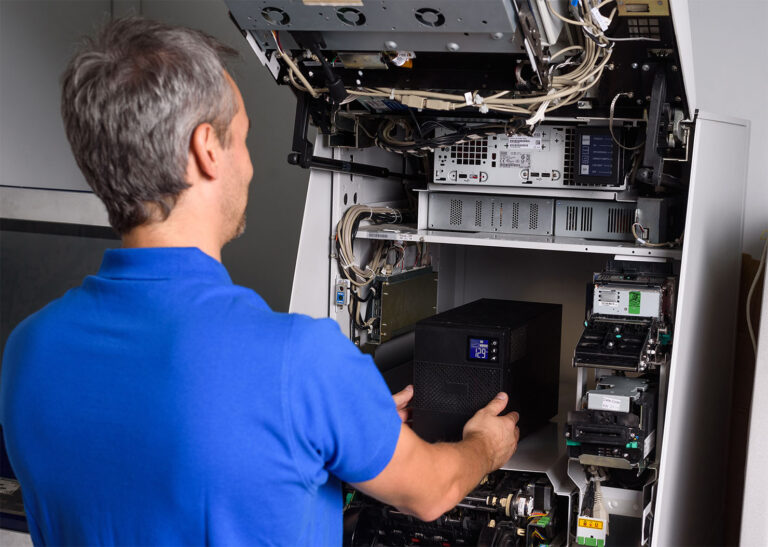
Since the start of the full-scale invasion, there have been regular mass attacks by russia on Ukraine’s energy infrastructure. As a result, rolling blackouts have affected the operation of banking self-service devices, making it impossible to accept and dispense cash, perform service maintenance, and carry out cash collection. This leads to financial losses for banks, including missed commission income and costs associated with unsuccessful or repeat trips for equipment servicing.
Additionally, power outages make it difficult for citizens to access banking services to meet basic needs. To address this issue, in 2022, under the initiative of the National Bank of Ukraine (NBU), the PowerBanking network was created to ensure banking services even during blackouts. However, for uninterrupted access to banking services, traditional technical equipment must be adapted to new energy realities.
RENOME SMАRT conducted comprehensive laboratory analyses and research on various types of uninterruptible power supplies (UPS). Based on the results, our experts offer three effective solutions for ensuring the energy independence of banking self-service devices.
Installation of Online UPS
Problem
Most self-service devices (ATMs, information-payment terminals, electronic safes, etc.) used in Ukraine are equipped with line-interactive UPS systems, which are incompatible with alternative power sources. As a result, constant voltage fluctuations or power from a generator can cause these devices to malfunction. For example, they may stop working under unstable power conditions, or the UPS may enter protection mode and prevent the equipment from restarting after power is restored.
Fixing such malfunctions can take a long time, which negatively affects user satisfaction and results in financial losses for banks due to lost revenue and additional servicing costs.
Solution
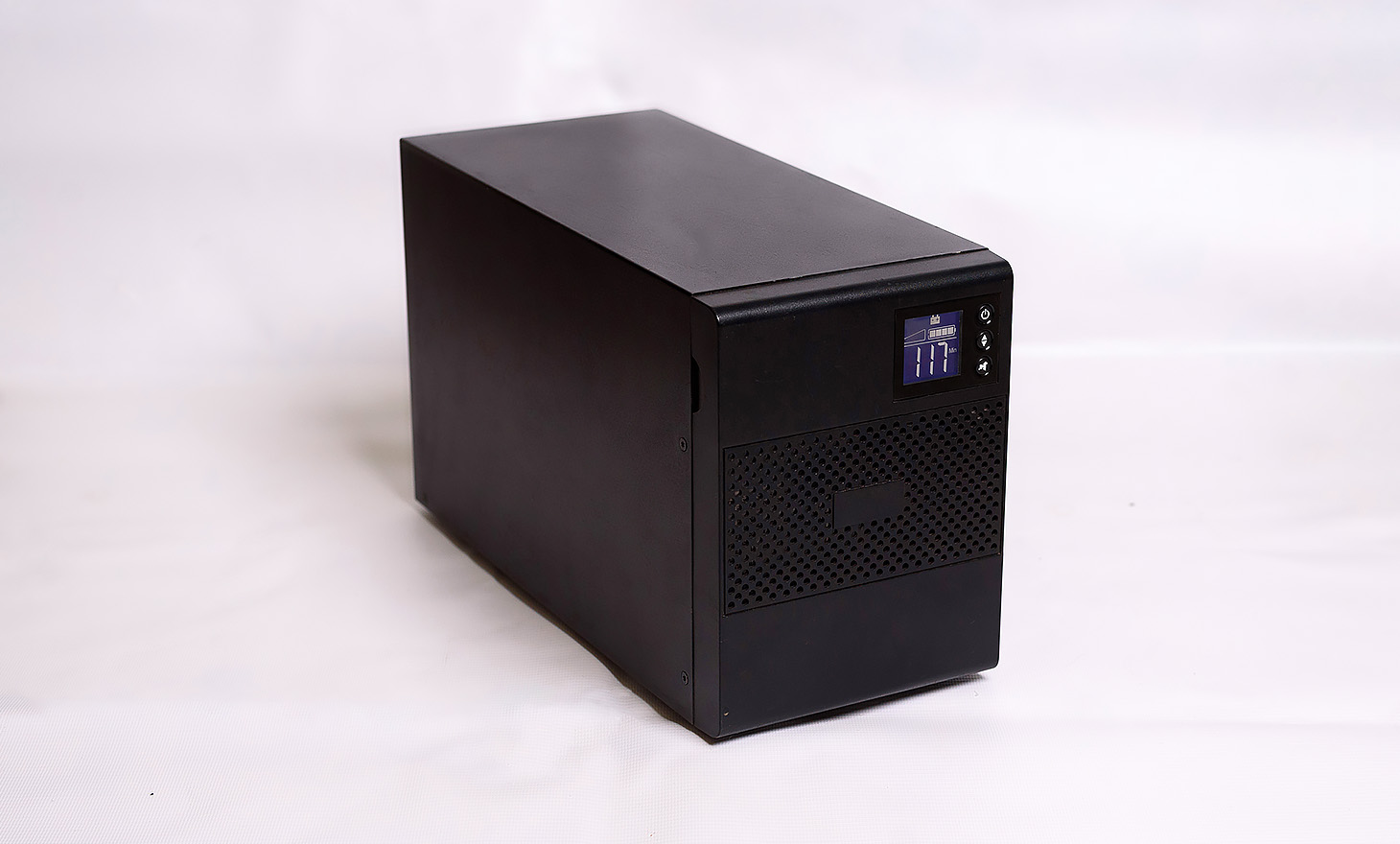
Installing online UPS systems for self-service devices. These types of UPS, with double conversion, convert alternating current from the grid to direct current, stabilize it, and then invert it back to alternating current. Such UPS systems are resistant to voltage fluctuations and compatible with alternative power sources (like generators). They protect the equipment from sudden power outages and voltage/frequency fluctuations. In addition, the UPS allows ongoing transactions to be completed even during unexpected power cuts, significantly increasing the availability of equipment, which aligns with the PowerBanking strategy.
Properly selected online UPS systems prevent additional service costs and help banks retain their income.
Advantages
- Versatility: Compatible with generators and AVR (Automatic Voltage Regulator).
- Safety: Compatible with the security systems of ATMs and self-service terminals. Installed inside the ATM.
- Cost-Effectiveness: Optimal cost-to-quality ratio.
- Reliability: Tested in laboratory conditions with successful use cases from RENOME SMART’s partners.
Inverter + Battery Pack
Problem
When the power goes out, properly selected UPS systems ensure that a user’s transaction is completed correctly and that the ATM safely shuts down. However, they do not guarantee autonomous operation of self-service devices. Ensuring the ability to perform financial operations and access funds during blackouts is essential for meeting citizens’ basic needs.
Solution
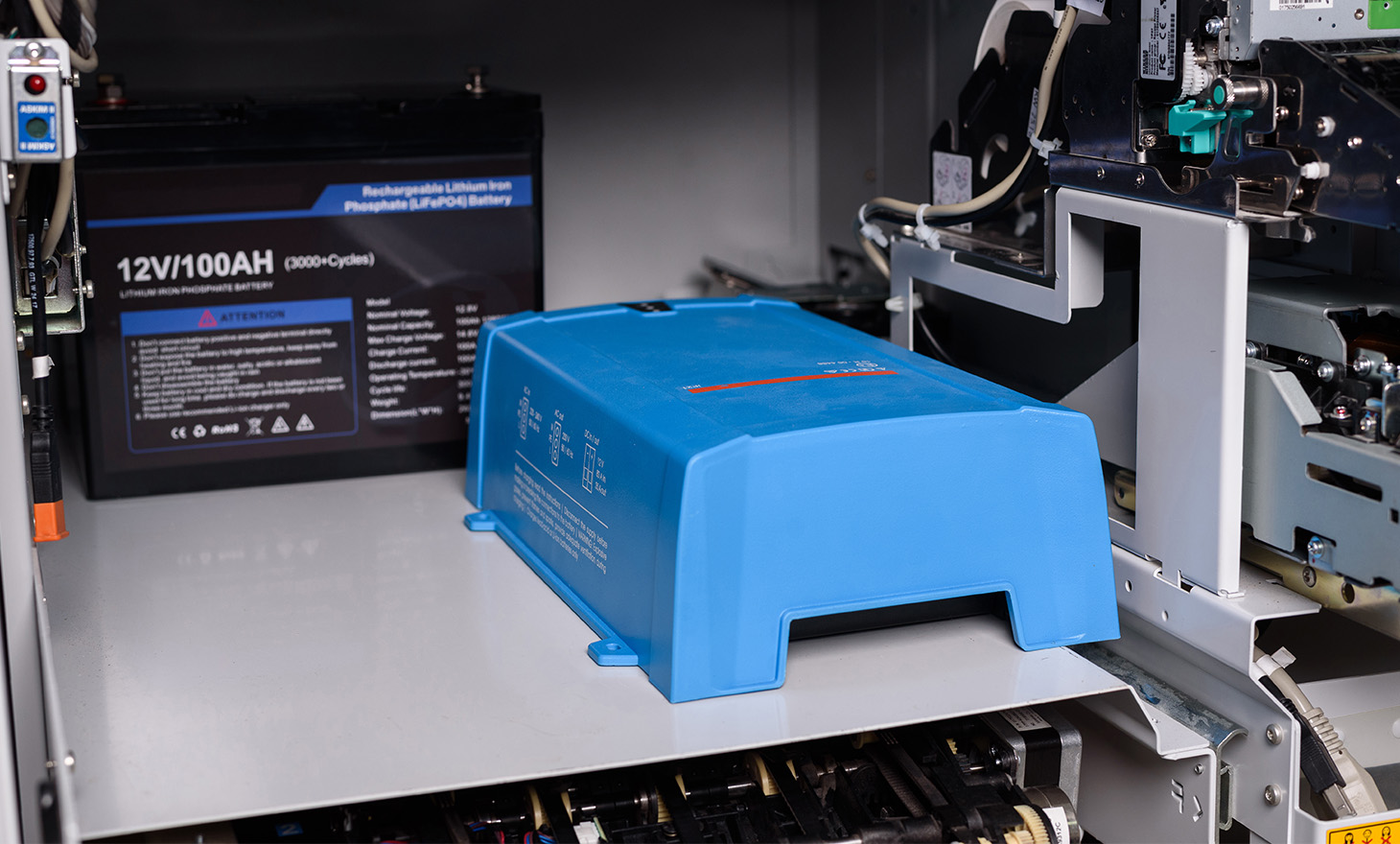
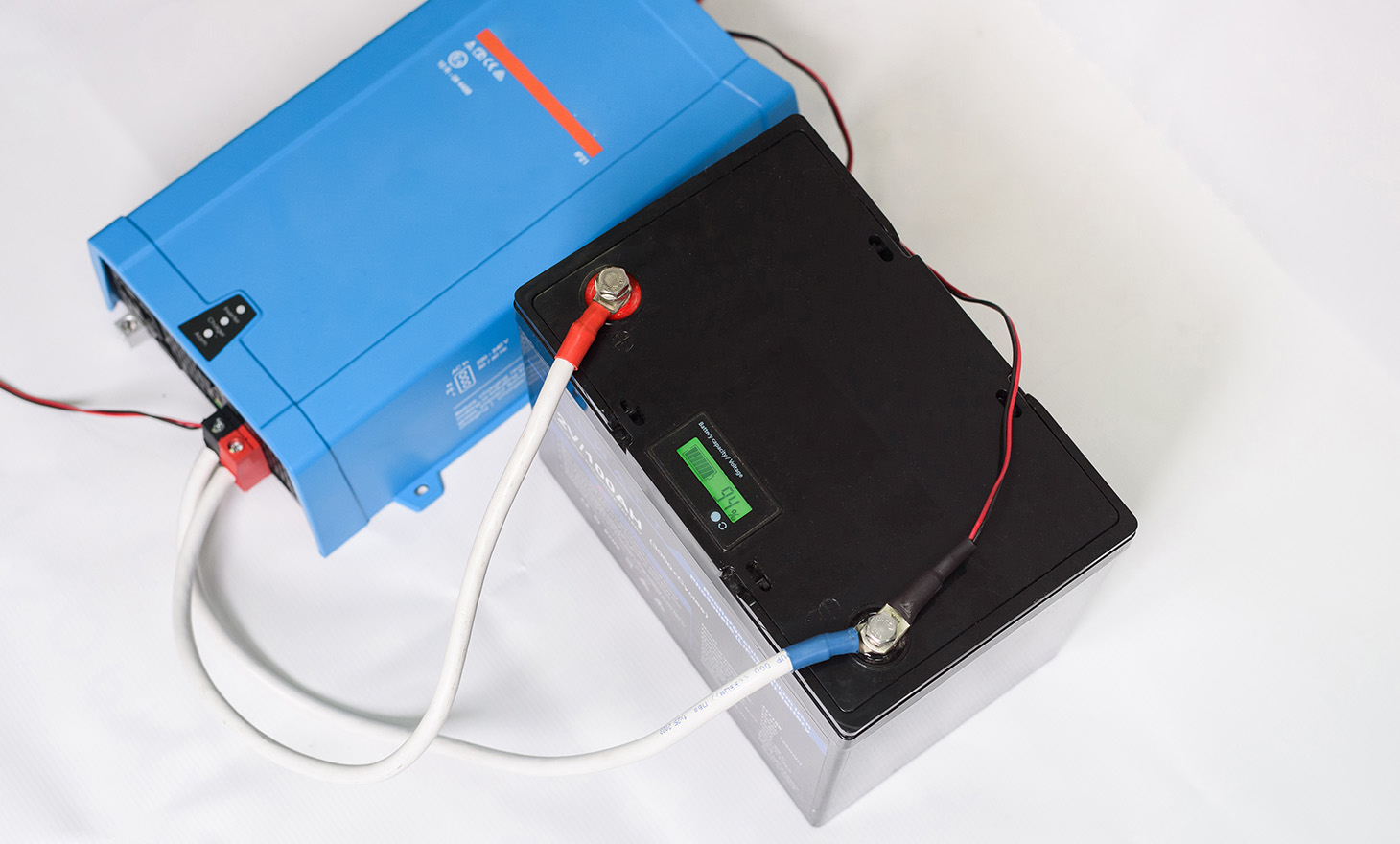
Installing additional, more powerful equipment – a power upgrade kit, including an inverter and battery pack (BP) – on self-service devices. Devices equipped with this system align with the PowerBanking strategy and allow users to carry out financial operations even without a power supply. Additionally, the upgrade kits (inverter and BP) allow ATMs to automatically restore functionality without human intervention, significantly reducing the bank’s servicing costs and preventing losses due to device downtime.
Advantages
- Autonomy: Up to 4 hours of operation, depending on the season (summer/winter) with fast recharging.
- Safety: Installed inside the ATM.
- Versatility: Adapted for different models (with or without heating).
- Reliability: Long service life.
Mobile Power Sources for Cash Collection Services
Problem
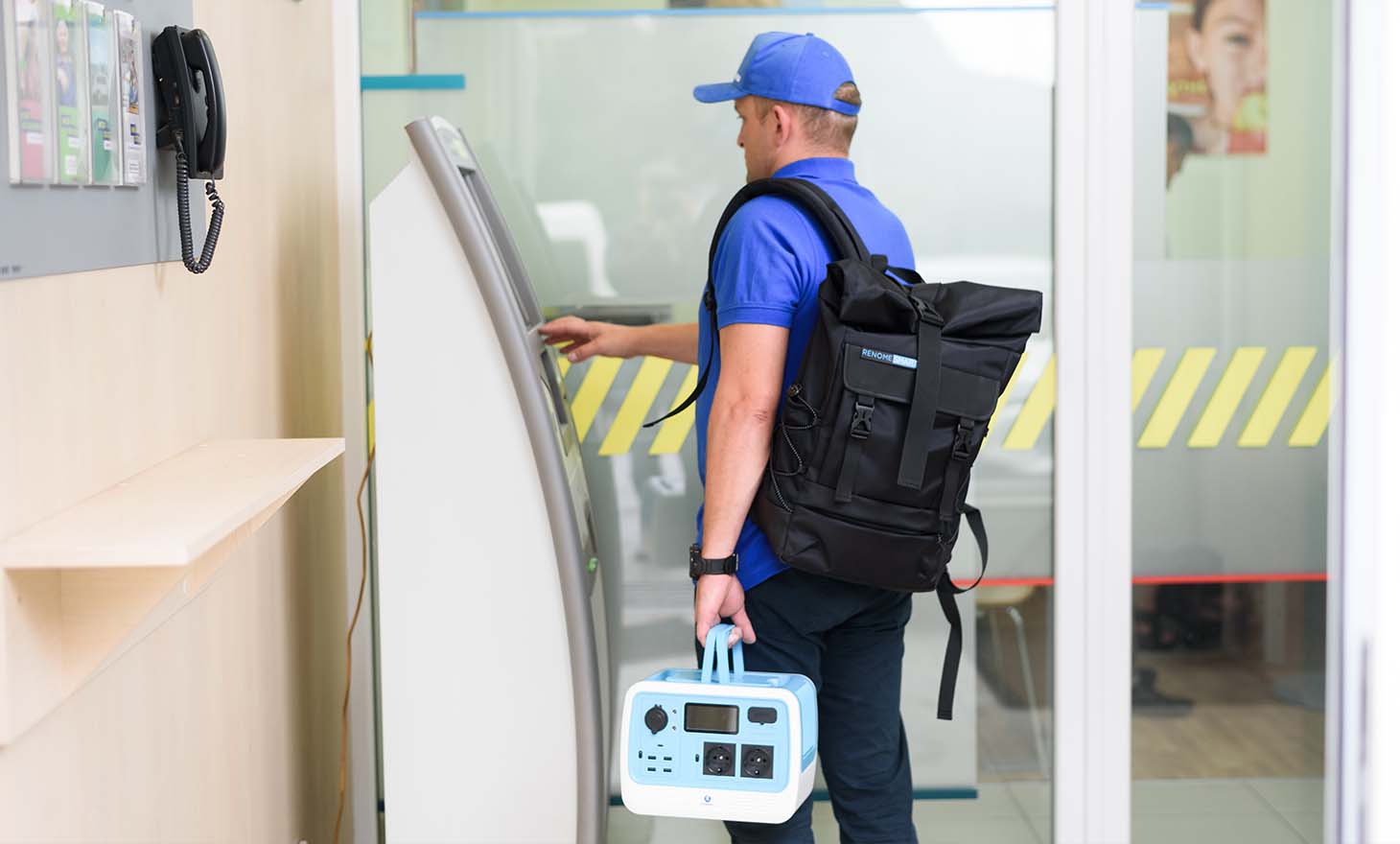
Power outages often make it impossible to conduct timely cash collection for equipment. Cash collection services must adjust to the schedules of rolling blackouts, which don’t always align with reality. Small towns or remote regions, where cash collection happens only a few times a week, are especially affected. When timely cash collections are missed, residents are unable to withdraw their pension or salary funds and must wait for the next scheduled collection.
Solution
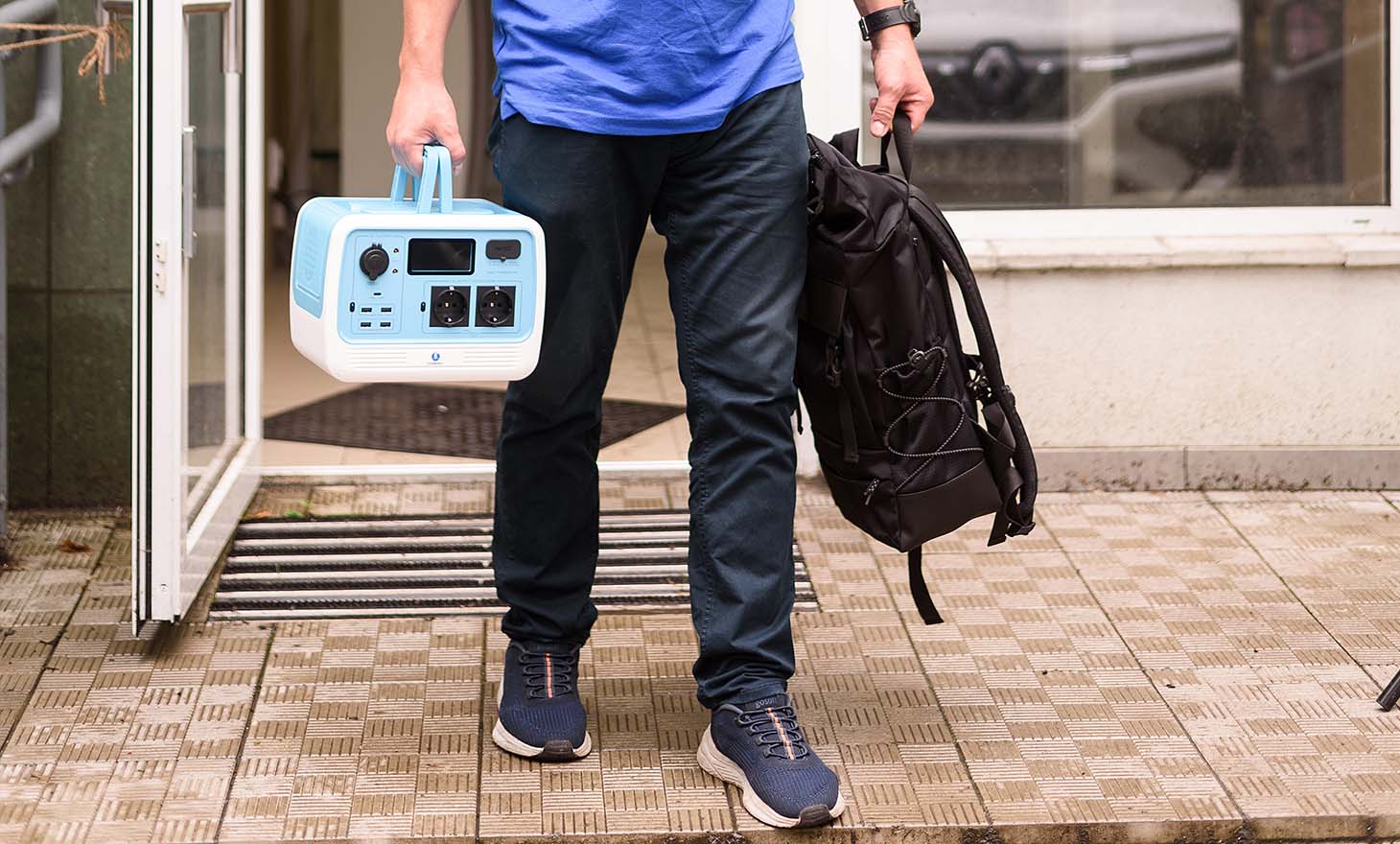
Mobile power sources for cash collection services. These devices enable equipment to be powered on and cash collection to be performed in the absence of electricity. Based on detailed research, market analysis, and laboratory testing, our experts have identified the optimal alternative power source for collecting cash from banking equipment.
Advantages
-
- Power: A fully charged battery is enough to service at least 20 units of equipment.
- Versatility: A multi-vendor power source that handles the startup of different types of self-service devices.
- Mobility: Portable and easy to connect, with the ability to charge from a car. No special skills required for operation.
For detailed information on device models that are best suited for banking equipment, please contact our managers.